
On this page
Build the Core ModelHow On-chain State Is FormedWhat to Check During UseCommon Misunderstandings and TroubleshootingSecurity and Risk Boundaries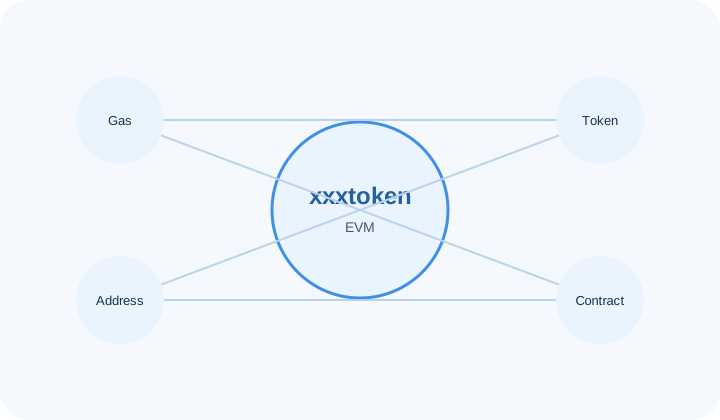
Build the Core Model
Understanding EVM Networks starts with the relationship between the object being acted on, the network carrying the action, the permissions being requested, and the result that can be verified on-chain. Use EVM as the starting point, then confirm addresses and gas in the intended network context. Before accepting smart contracts, consider the cost or state change involved, and use tokens together with approvals to connect what the wallet displays with what the network actually recorded.
EVM
In everyday use, EVM and addresses can appear in the same workflow even though they serve different purposes. gas identifies the immediate operation, while smart contracts may describe a cost, state or execution condition. tokens is useful after the action has been submitted. If something looks wrong, avoid repeatedly resubmitting the same request; check approvals and the relevant block explorer first so the next action is based on observable network state.
How On-chain State Is Formed
A useful safety habit for EVM Networks is to preserve an independent review step before confirmation. Check the source of the request, the target, the network, the amount, the permission scope and the expected result. In practical terms, confirm EVM, verify addresses, understand gas, evaluate smart contracts, and then review tokens and approvals. This creates a more reliable decision process than relying only on a familiar interface.
addresses
It is also important to separate wallet presentation from blockchain state. A wallet can organize EVM and addresses, but the final state is determined by the network. gas, smart contracts, tokens and approvals may change because of congestion, contract behavior or user choices. When troubleshooting, prefer verifiable network data and the exact request details over assumptions based on a previous transaction.
What to Check During Use
When several networks or applications are used together, similar names do not make EVM and addresses interchangeable. Before working with gas, identify the target network and asset type. If smart contracts is involved, verify what asset pays the network fee. After submission, track the result through tokens and approvals. This sequence makes cross-network mistakes easier to prevent and problems easier to isolate.
gas
EVM Networks can be managed with a repeatable routine: review EVM before starting, watch addresses and gas during the action, check smart contracts again before confirmation, and use tokens and approvals after completion. The value of a routine is not complexity; it is the ability to keep essential checks in place even when the interface or action feels familiar.
Common Misunderstandings and Troubleshooting
When troubleshooting EVM Networks, it helps to reconstruct the action in time order. Record the network and account context around EVM, verify whether addresses matched the intended target, and then determine whether gas and smart contracts were actually submitted. Finally, use tokens and approvals to find observable network state. This sequence separates display delays and congestion from a genuine failed action.
smart contracts
Using EVM Networks across more than one device should not remove the need for the same checks. A device presents and submits requests, but EVM, addresses and gas still need to be interpreted in network context. When smart contracts appears, understand the permission or fee implication, while tokens and approvals provide a way to verify the result after the action is complete.
Security and Risk Boundaries
For someone new to EVM Networks, a small and verifiable learning path is more useful than changing several variables at once. Start by checking EVM and addresses, then observe how gas affects the outcome. After understanding smart contracts, learn how tokens and approvals can be used to trace state. This order makes it easier to build judgment instead of memorizing interface steps.
tokens
Finally, place EVM Networks inside the wider wallet workflow. EVM rarely stands alone; it usually combines with addresses and gas to shape the next decision. smart contracts may affect cost, permission or execution, while tokens and approvals provide evidence afterward. Connecting these details makes the process understandable even when the interface changes.
Seed phrases and private keys should remain under the user’s control. Official staff will not ask for a seed phrase, private key or verification code. On-chain transactions generally cannot be reversed by a wallet alone, and third-party DApps or smart contracts can introduce technical and permission risks.
Related reading
All download actions use the shared download page and continue only after a user action.
Download imtoken